Buying guide
Motorised vs manual louvre awnings: what's the difference?
Both give you a louvre roof with blades that open and close. The difference is how you drive them: a hand crank, or a motor with a remote and, if you want, sensors that do the work for you. Here is how to choose.
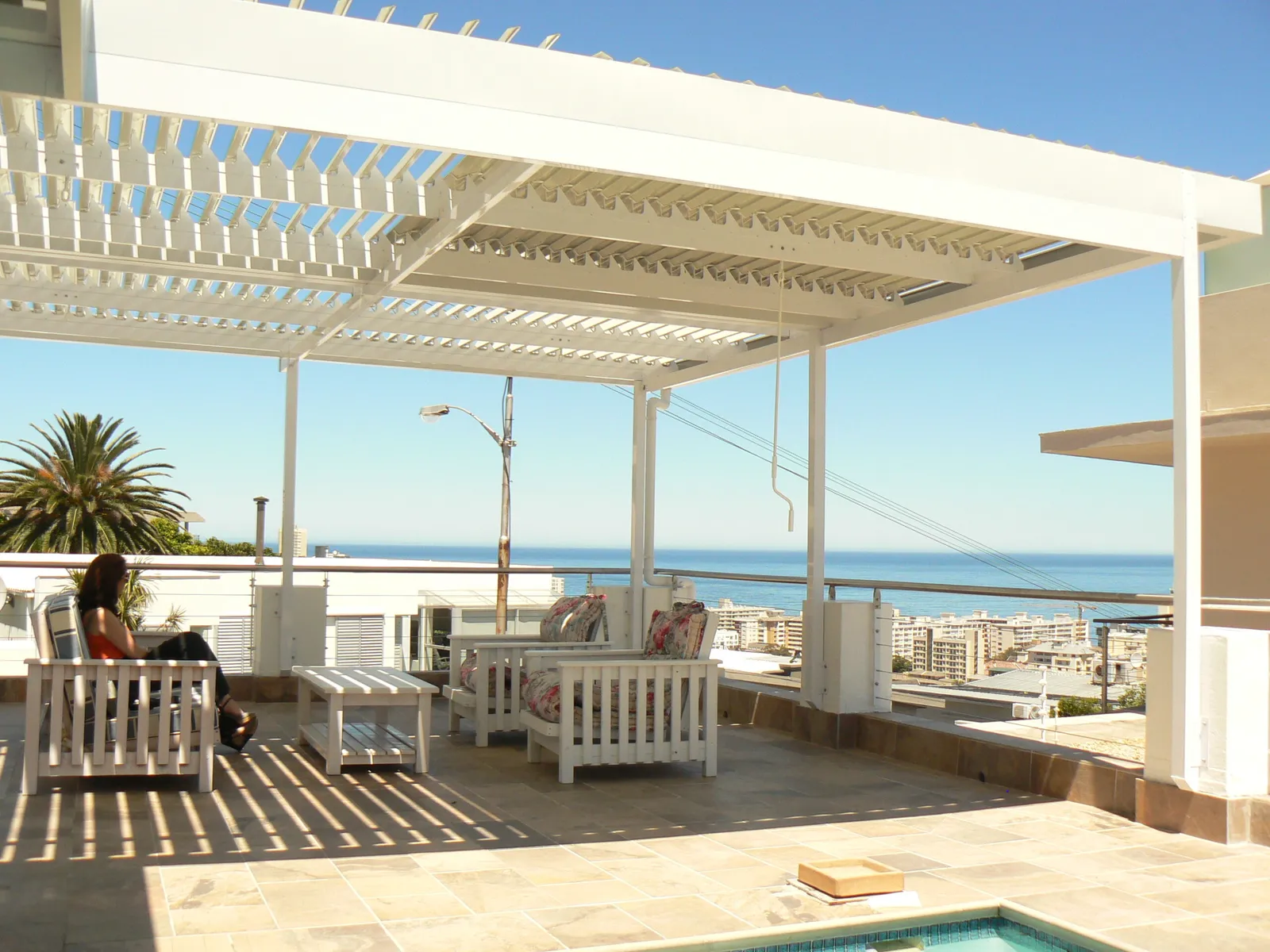
A louvre awning is the same roof either way; the choice is how you operate the blades. A manual louvre awning uses a simple crank handle. A motorised one runs on a quiet motor with a remote or wall switch, and it opens the door to automation. Both are solid choices, so the right one depends on your budget and how hands-on you want to be.
How each one operates
A manual louvre awning tilts open and closed with a crank handle. There is no wiring and nothing to power, which keeps it simple and dependable. A motorised louvre awning replaces the crank with a motor, so the blades move at the push of a button. No reaching, no winding, and it handles larger roofs with ease.
Cost
A manual roof is the most affordable way into a louvre awning, because there is no motor, controls or wiring to add. Motorisation costs meaningfully more for the hardware and the electrical work. Many homeowners start manual and are happy with it; others decide the daily convenience is worth the difference. Our guide on what affects the cost of a louvre awning covers the other factors that move the number.
Convenience and sensors
Once a roof is motorised you can add rain and wind sensors that close the blades automatically when the weather turns, plus smart-home control and separate zones for larger areas. That protection matters if the patio is away from the house or you are often out. A manual roof asks you to be there to crank it, which is fine for a covered spot you use daily.
Reliability and upkeep
Manual mechanisms have very little to go wrong, which some homeowners prefer. Motorised systems use proven, weather-rated motors, and the wiring is concealed in the frame. Either way the aluminium structure is the same, finished in one of 23 baked-on colours so it holds up to the sun without fading.
Which should you choose?
Choose manual if you want the simplest, most cost-effective route and you are happy to crank the blades yourself. Choose motorised if you want one-touch control, the option of sensors, or you are covering a large span. A free site visit is the surest way to decide, and one of our own consultants will measure the space and quote it in writing. Everything we fit is backed by a 10-year guarantee on materials and a year on workmanship.
Good to know
Motorised vs manual louvre awnings: common questions
Is a motorised louvre awning much more expensive?
It costs meaningfully more than a manual roof of the same size, because you are adding the motor, controls and wiring. A manual louvre awning is the most cost-effective entry point.
Can I add sensors to a manual louvre awning later?
Sensors need a motor to drive the blades, so automation is only available on a motorised roof. If sensors matter to you, it is worth motorising from the start. A site visit is the best place to plan this.
What do rain and wind sensors actually do?
They close the blades automatically when it rains or the wind picks up, protecting the patio even when you are not home. They are an option once the roof is motorised.
Is a manual roof harder to use on a large patio?
Cranking a very wide roof by hand takes more effort, so motorisation is often the easier choice on large spans. On a normal patio a manual crank is quick and simple.
Free consultation & quote
Request a free quote today.
Tell us what you have in mind and where you are. One of our own consultants (not a call centre) comes back to you, measures on site and quotes with no obligation.
Four branches nationwide
We service all areas in Cape Town, Johannesburg, Pretoria and on the Garden Route
Local teams measure, manufacture and fit from four branches: head office in Cape Town, plus Johannesburg, Pretoria and Wilderness.