Comparison
Louvre awnings vs traditional pergolas: which adds more value?
A timber pergola looks lovely on day one. An adjustable louvre awning does more and asks for less as the years pass. If you are choosing between the two, here is an honest comparison on the things that matter.
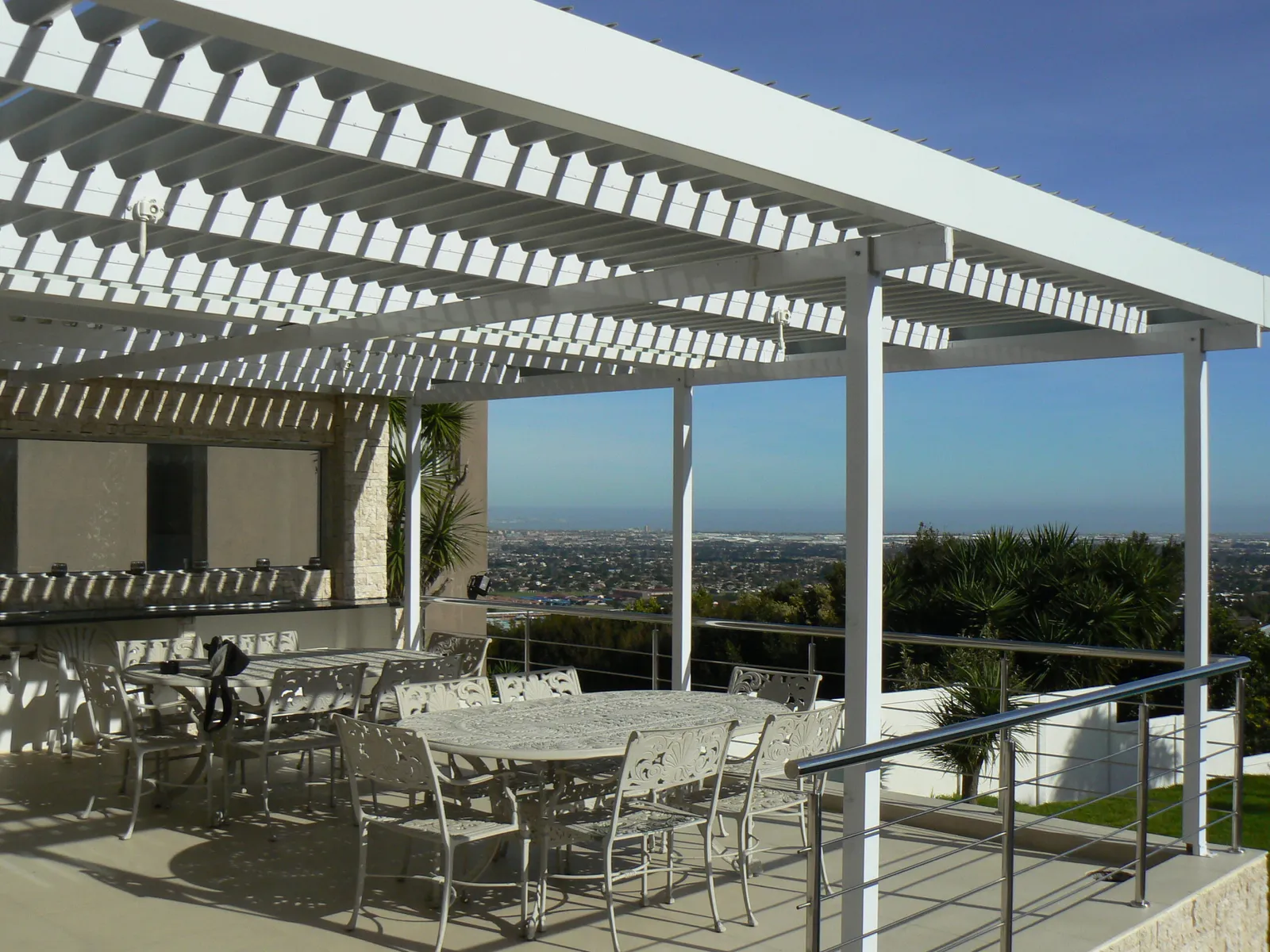
The real difference is control. A traditional pergola is a fixed frame, often with an open top or fixed slats, so the shade it gives is the shade you get. A louvre awning has blades that open, tilt and close, so you decide how much sun and rain reaches the space. That one difference shapes almost everything below.
Shade and sunlight
A pergola with an open or fixed top gives dappled or partial shade that shifts with the sun, and it does little against rain. A louvre awning lets you open the blades for full sun on a cool morning, tilt them to cut the afternoon glare, and close them for solid shade when it turns fierce. You are not stuck with one setting all year.
Weather protection
This is where the gap is widest. An open pergola offers no shelter when the weather turns, so the space sits unused on a rainy day. Close the blades on a louvre awning and the area stays dry, which means you actually use the patio through winter and through a Highveld thunderstorm. Add drop blinds to a side and you close off wind and low sun too.
Upkeep over the years
A timber pergola needs regular attention: sanding, sealing or oiling, and watching for rot, splitting and borer. Skip a season and it starts to show. An aluminium louvre awning asks for a wash now and then and nothing more. There is no rust, no rot and no repainting, and our colour is baked into the metal across 23 shades so it does not fade or peel.
Lifespan and durability
Timber weathers, especially in coastal salt or under constant UV, and even a well-kept pergola has a limited life outdoors. Aluminium holds its shape and finish for far longer in the same conditions. Every louvre awning we build is backed by a 10-year guarantee on materials and a year on workmanship, which is not something a timber structure tends to come with.
Which adds more value?
A pergola can be the cheaper start, and a well-built one has real charm. But an adjustable, weatherproof, low-maintenance cover turns a patio into a room you use all year, and that usable space is what buyers notice. For long-term value, the louvre awning generally does more work for the money. If you want the solid-roof look instead, an aluminium fixed IBR cover is another durable option worth weighing up.
Getting the right choice for your home
The best way to decide is to see the space assessed in person. Our own consultant visits at no charge, measures up and talks through what suits your patio and budget, then puts a firm figure in writing. As a family firm building these covers since 1988, we would rather help you choose well than sell you the wrong thing.
Good to know
Louvre awnings vs pergolas: common questions
What is the main difference between a louvre awning and a pergola?
A pergola is a fixed frame with an open or fixed top, so the shade stays the same. A louvre awning has blades that open, tilt and close, letting you control sun and rain through the day.
Does a louvre awning keep the rain out?
Yes. Close the blades and the area underneath stays dry, so you can use the patio through winter and in a storm. An open pergola offers no rain cover.
Which needs less maintenance?
The louvre awning. Timber pergolas need sanding, sealing and rot checks, while an aluminium louvre awning just needs an occasional wash, with no rust, rot or repainting.
Which adds more value to my home?
An adjustable, weatherproof, low-maintenance cover gives usable year-round space, which is what buyers notice. For long-term value, a louvre awning generally does more than a timber pergola.
Free consultation & quote
Request a free quote today.
Tell us what you have in mind and where you are. One of our own consultants (not a call centre) comes back to you, measures on site and quotes with no obligation.
Four branches nationwide
We service all areas in Cape Town, Johannesburg, Pretoria and on the Garden Route
Local teams measure, manufacture and fit from four branches: head office in Cape Town, plus Johannesburg, Pretoria and Wilderness.