Care guide
Awning and patio cover maintenance: keeping aluminium looking new
One of the best things about an aluminium cover is how little it asks of you. There is no sanding, sealing or repainting. A wash now and then and a quick check of the moving parts is really all it takes. Here is a simple routine.
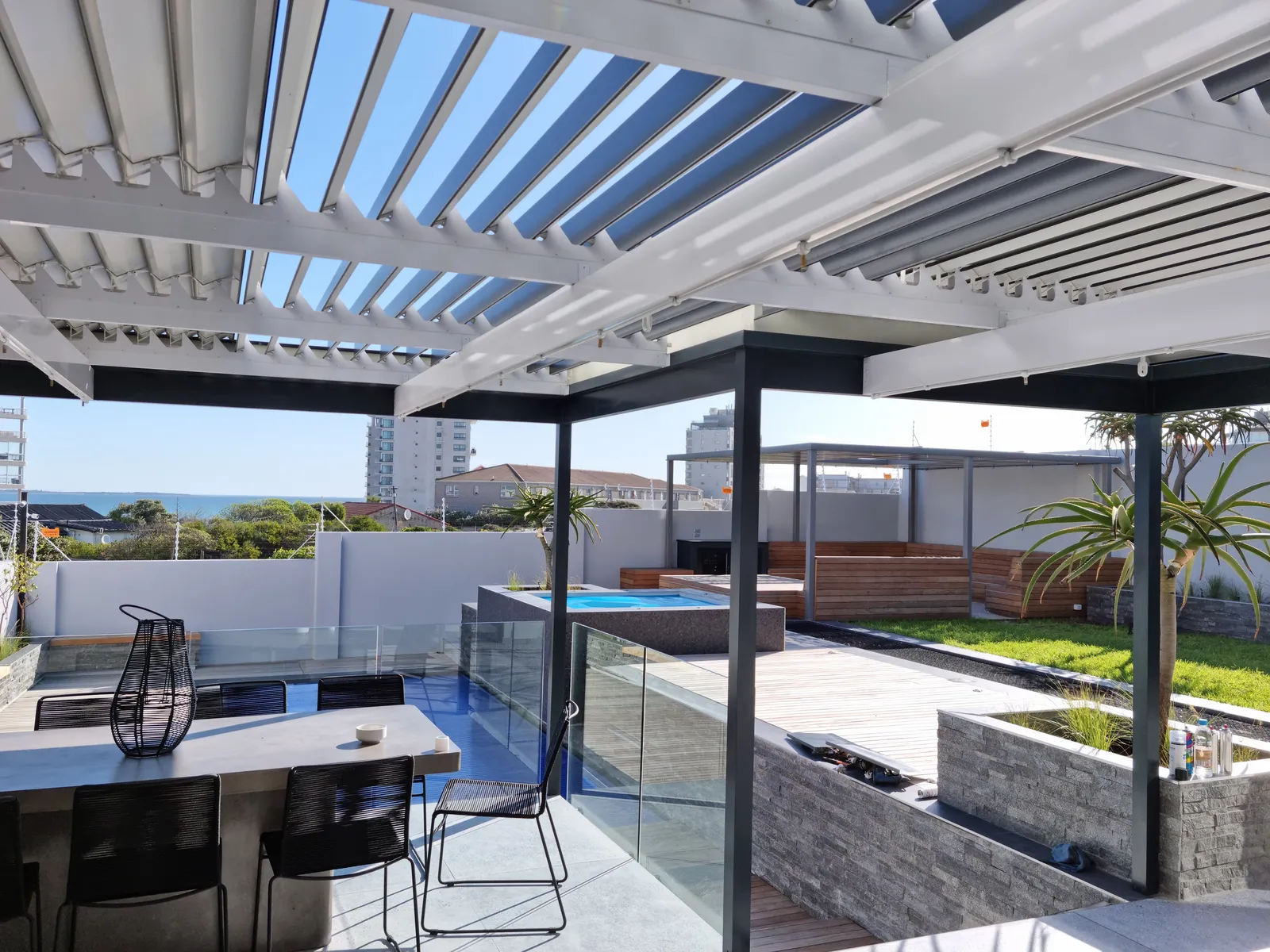
Aluminium is low-maintenance by design, not maintenance-free. A little regular care keeps the finish bright and the moving parts running smoothly for years. None of it is hard, and most of it you can do yourself in an afternoon. Here is what to do and how often.
Washing the finish
Twice a year is enough for most homes. Rinse off dust and grime with a hose, then wash the frame and sheets with warm water and a little mild dishwashing liquid using a soft cloth or sponge. Rinse again and let it dry. Skip abrasive pads, scouring powders and harsh solvents, as they can dull the surface. Because our colour is baked into the aluminium across 23 shades rather than sprayed on, the finish resists UV and does not chalk or peel, so gentle washing is all it needs.
Coastal and dusty areas
Salt air near the coast and fine dust inland both build up faster, so a home in Cape Town or the Southern Cape may want a wash every few months rather than twice a year. A quick freshwater rinse between proper washes helps keep salt from settling on the frame. It is easy and it keeps everything looking new.
Caring for louvre blades and motors
For a louvre awning, wipe the blades when you wash the frame and clear any leaves from the gutters and the ends of the blades so water drains freely. Open and close the roof through its full range now and then to keep it moving smoothly. If yours is motorised, keep the controls dry and simply have the motor and sensors looked at if anything feels off rather than forcing it.
Drop blinds and folding arm awnings
Let a drop blind or a folding arm awning dry before you roll it away, because packing away damp fabric can leave marks over time. Brush off dust and leaves, and keep the tracks and arms clear so they run without catching. In big wind, retract a folding arm awning to protect it.
Clearing gutters and drainage
Any cover with built-in guttering, including fixed IBR covers, needs its channels kept clear so rainwater drains away instead of pooling. Clear leaves before the rainy season and check that outlets are not blocked. A patio ceiling underside just needs an occasional dust or wipe.
When to call us
Most upkeep is simple, but if a motor stops responding, a sensor misbehaves or a fixing works loose, it is worth having our team take a look. Everything we build is backed by a 10-year guarantee on materials and a year on workmanship, and as a family firm running since 1988 we are still here to help long after installation.
Good to know
Maintenance: common questions
How often should I clean an aluminium cover?
Twice a year suits most homes. Near the coast or in dusty areas, every few months is better, with a quick freshwater rinse in between to keep salt and grime from building up.
What should I use to wash it?
Warm water with a little mild dishwashing liquid and a soft cloth or sponge. Avoid abrasive pads, scouring powders and harsh solvents, which can dull the finish.
Does the baked-in colour need repainting?
No. The colour is baked into the aluminium rather than sprayed on, so it resists UV and does not chalk or peel. There is no sanding, sealing or repainting to do.
How do I look after a motorised louvre roof?
Keep the controls dry, clear leaves from the blades and gutters, and run the roof through its full range now and then. If the motor or a sensor stops behaving, have our team check it rather than forcing it.
Free consultation & quote
Request a free quote today.
Tell us what you have in mind and where you are. One of our own consultants (not a call centre) comes back to you, measures on site and quotes with no obligation.
Four branches nationwide
We service all areas in Cape Town, Johannesburg, Pretoria and on the Garden Route
Local teams measure, manufacture and fit from four branches: head office in Cape Town, plus Johannesburg, Pretoria and Wilderness.